 16 Jan 2026

In a global tourism landscape increasingly shaped by the climate emergency, social responsibility, and conscious travel, REMOTE Latin America reinforces a clear position: tourism events must take responsibility for their impacts and place sustainability at the core of their strategy — not as an add-on, but as a guiding principle.
As the organizer of REMOTE Immersion, a boutique, itinerant event focused on small-scale luxury and experiential travel in Latin America, REMOTE believes that tourism gatherings must lead by example. From environmental impacts to community engagement, events have the power and the responsibility to influence practices, shape mindsets, and leave a positive legacy in the destinations they touch.
“Sustainability and regenerative tourism are often discussed at events, yet translating these conversations into concrete action is not always straightforward,” says Marcelo Pontes, Commercial Director of REMOTE Latin America. “We believe that going further is essential — and that means much more than waste management and emissions offsetting.”
REMOTE's sustainability strategy was intentionally designed as an evolving, long-term process rather than a fixed checklist. Developed in 2023 for the Cuenca edition by the Chilean organization Regenera NGO, the strategy is inspired by the Global Sustainable Tourism Council (GSTC) Criteria and the Sustainable Development Goals. As each edition of REMOTE Immersion takes place in a different Latin American destination, the strategy is adapted to local realities, challenges, and opportunities.
“This itinerant nature demands constant adaptation, local listening, and context-specific solutions — while maintaining a consistent commitment to reducing environmental impacts and strengthening local benefits,” explains Ana Duék, Sustainability Consultant at REMOTE. “Our distinguishing feature is that we seek to extend our impact beyond the event venues, involving hosts, suppliers and local entrepreneurs as much as possible.”
This approach involves working closely with local partners and communities; prioritizing small-scale, responsible hospitality and experiences; investing in local capacity-building initiatives; promoting learning and knowledge-exchange spaces for local professionals; and continuously improving how impacts are measured, reduced, and addressed.
Environmental actions include estimating and offsetting greenhouse gas emissions, reducing waste and single-use plastics — with the aim of reaching near-zero waste — and favoring low-impact operations whenever possible. Event participants are also invited to engage through a Responsible Traveler's Guide and by offsetting the emissions associated with their flights.
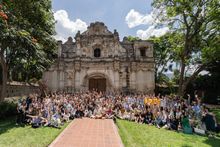
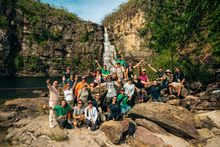
Months before each edition, REMOTE offers brief sustainability consultancy sessions to its on-the-ground suppliers to align practices and inspire long-term improvements. To date, around 60 suppliers from destinations such as Cuenca (Ecuador), Puyehue (Chile), Antigua (Guatemala), and Chapada dos Veadeiros (Brazil) have participated in these exchanges. Preparations are now underway to engage hoteliers, catering providers, and activity operators in Boquete, Panama, ahead of the 2026 edition.
“We understand that sustainability is not a destination — it's a journey,” says Clara Davies, Communications Director at REMOTE Latin America. “Especially for events, which are by nature temporary, the challenge is to ensure that what remains after we leave is positive, meaningful, and lasting. Simply promoting a destination and encouraging future visitors is no longer enough.”
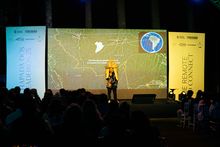
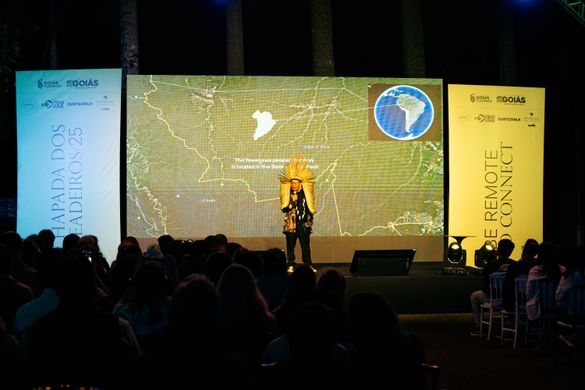
For the past six editions, REMOTE Immersion has promoted REMOTE Legacy, a parallel, free-of-charge initiative open to the local community. The program brings together renowned speakers and professionals to discuss responsible tourism topics relevant to each host destination.
With each edition, REMOTE Immersion has expanded its local engagement, strengthened partnerships with community-led initiatives, and refined its sustainability practices — always acknowledging that there is more to learn, improve, and evolve. As conversations around responsible and regenerative tourism continue to gain momentum, REMOTE Latin America hopes its experience can inspire other tourism players to rethink their role, embrace accountability, and actively contribute to more resilient destinations.
Learn more about REMOTE Latin America: https://remote.la/